 AnnexHub
Badges and lanyards for corporate events
Pre-printed badges are faster until one name is wrong. Then they are the slowest thing at the door.
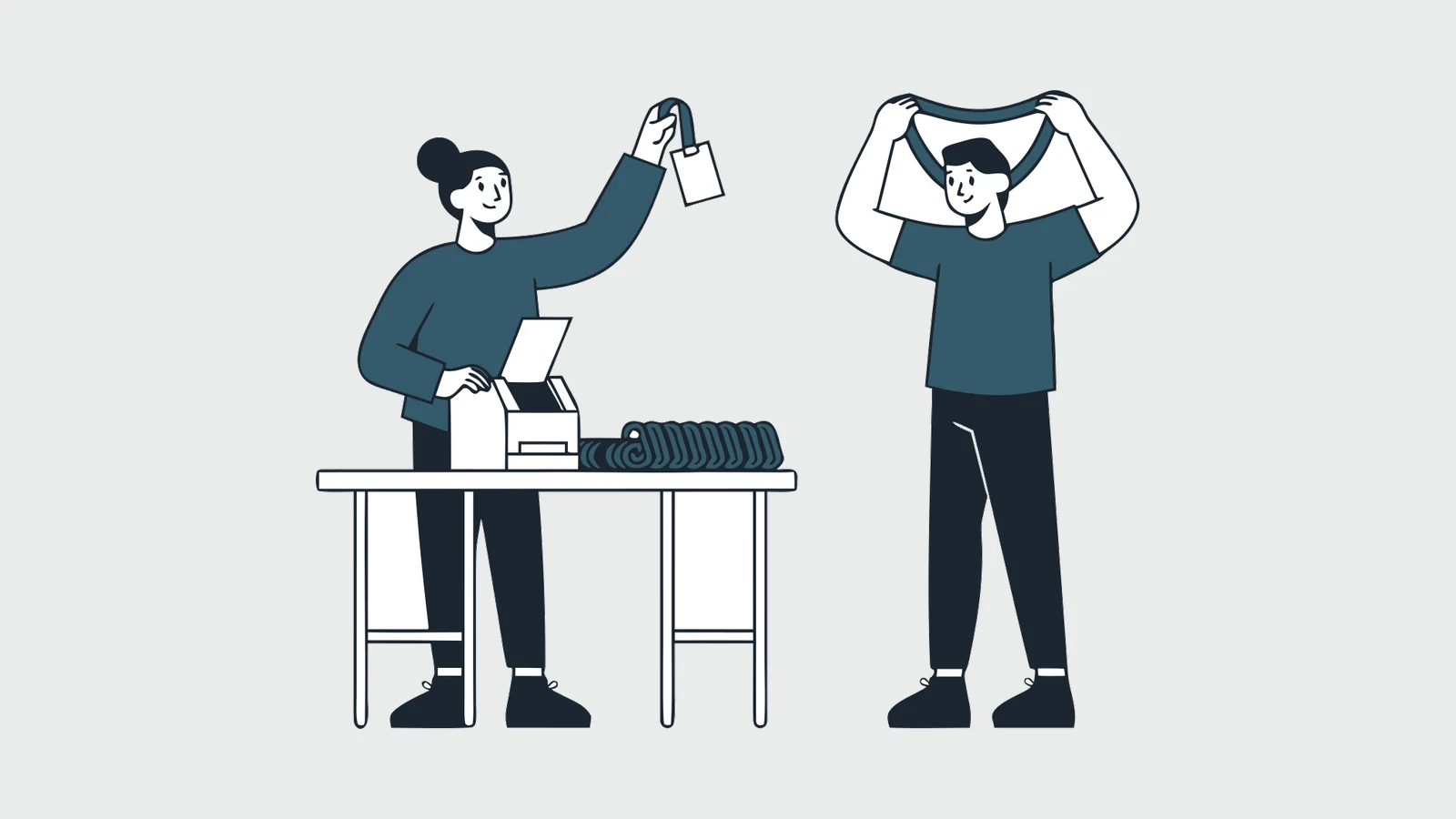
Badges look like a print job. They are actually a queue-management decision, and the decision is made weeks before anyone gets near a printer.
The real choice: print before, or print at the door
Pre-printed
Every badge produced in advance and laid out for collection.
Fast when it works. The guest gives a name, someone hands over a badge, done. No printer, no power, no consumable to run out of.
Slow the moment it does not. A wrong name, a late registration or a job title that changed last week all become an exception, and every exception is a person standing at the table while somebody works out what to do. Pre-printing optimises for the guests who were never going to be a problem.
The hidden cost is the layout. Four hundred badges laid alphabetically is a wall of paper, and finding one under pressure is exactly the linear search that makes printed attendee lists slow.
Printed at the door
A badge printer at the desk. Scan or search, print, hand over.
Slower per guest, and that is the honest trade. But it has no exception case. A walk-in, a corrected spelling and a last-minute VIP are all just another print. Nobody stands aside waiting for a decision, and the thing that ruins a door is not slowness, it is stopping.
It also means the badge always says what the record says, which matters more than it sounds when the client is checking their own list at the entrance.
What we would actually do
For most corporate events under about 300 guests, pre-print with a live printer on standby for exceptions. You get the speed of pre-printing and the recovery of on-demand.
Where the 300 comes from, and what it actually limits. It is not a printing cost threshold. It is the point where finding the badge starts costing more than scanning the ticket did.
A check-in lane clears a guest roughly every four seconds. For badge collection not to become the bottleneck, retrieval has to fit in about the same four seconds, which means somebody eyeballing a sorted pile of maybe fifteen or twenty cards. Three hundred badges across the alphabet averages a dozen or so per letter, which is comfortably inside that.
Except guest lists are not evenly spread, and Malaysian ones are especially lumpy. Tan, Lim, Wong, Lee and Ng between them can carry several times the average letter's share, so the pile that decides your speed is the biggest pile, not the average one. Sort your actual list by surname before the event and look at the largest group — that is the number that matters, and it is usually a surprise.
Which means 300 is really the capacity of one collection point, not a limit on pre-printing. Two collection points split by surname range roughly doubles it. Split by where the piles actually fall rather than at M, or one point takes most of the room.
Above that, or for any event with a genuinely fluid guest list, print at the door and staff the lanes properly. On our larger managed events the printer comes with the crew for exactly this reason.
What belongs on a corporate badge
Roughly in order of how far away it needs to be readable:
- First name, large. Large enough to read across a handshake, which is bigger than most designers want it. This is the entire point of a badge.
- Surname, smaller.
- Company. The second thing anyone looks for.
- A role or ticket-type marker if the door or the room needs to distinguish. Colour band, a word, or a different lanyard. Keep it simple enough to read at a glance.
What does not belong: a long job title, a QR code nobody scans after entry, a phone number, the event hashtag in a size that competes with the name, and your logo taking the top third. The badge is for humans reading each other, not for branding.
One layout decision worth making: print the name on both sides, or accept that half of them will be flipped over all day. Double-sided is the single cheapest fix to the most common badge complaint there is.
Lanyards
- Length matters. Too long and the badge sits below the handshake line where nobody can read it. Too short and it rides up under a collar.
- Breakaway clips if there is any activity component, or anywhere a lanyard could catch.
- Colour-coding by ticket type is genuinely useful for door staff and room stewards, and it survives being glanced at from across a hall in a way that printed text does not.
- Order more than you need. Lanyards are cheap, and running out at 40% attendance is a memorable way to look unprepared.
Plan for reprints, because there will be reprints
Names change. Titles change. Somebody registers with a nickname and turns up expecting the formal version. Somebody's badge goes through a wash cycle in a tote bag.
Budget a spare-stock allowance of around 5 to 10% in blanks and ribbon, and have the means to produce one on the day.
That is an allowance, not a measured reprint rate — we have never counted one. It is sized against the four things that actually consume it:
| What eats spare stock | Why it happens |
|---|---|
| Substitutions | A colleague attends instead. Routine on a corporate list, and the badge is wrong before the day starts. |
| Spelling and name form | Registered as a nickname, turns up expecting the formal name, or the other way round. |
| Late additions | Anyone who registered after you sent the print file. |
| Physical damage | A lanyard through a tote bag, a badge left in a taxi. |
Five percent covers substitutions and spelling on a stable list. Ten covers a client who sends a revised list in the final week, which is the common case rather than the unusual one.
Your own number is better than ours, and you already have it. Walk-ins and post-freeze registrations are both in your check-in record from the last event. Add them, add a couple of points for damage, and use that.
A printer that is present and idle costs very little. A guest with a wrong name and no way to fix it is a small humiliation that they remember, and they usually remember it about the client, not about you.
The physical layout at the door
If you are pre-printing, the badge table is not the check-in table. Separate them.
- Check-in lane scans and confirms.
- Collection point, immediately after, hands over the badge.
Combining them means one person doing a lookup and a physical search at once, which is the slowest possible arrangement. Splitting them lets you scale the two independently, and the badge search is the half that needs more hands as the list gets longer.
Sort collection by surname, not by company, unless the client's room is organised by table and you are handing over table numbers too.
What this costs
The line items people forget:
- Printer rental for the day, and a second one if the event is large enough that one failure would stop you.
- Blank badge stock, including the reprint margin.
- Ribbons or cartridges. Check the yield against your headcount and then buy more.
- Lanyards, plus spares.
- Someone to operate the printer, who is not also running a check-in lane.
On a lot of corporate events this bundle costs more than the event software does. It is worth pricing early, because it lands in a different budget line and often a different approval chain.
The short version
Under 300 to a collection point, pre-print with a live printer standing by. Above that, add another collection point or print on demand. Big first name, both sides, colour-code the lanyard rather than the text. Allow 5 to 10% spare stock, and never put the badge table and the check-in lane in the same queue.
Try it on a real event
The free tier covers one live event up to 50 guests.
Registration page, QR tickets and door check-in, including the offline scan queue. Enough to test the door properly before you commit to anything.